Showing posts with label Laura Ingalls Wilder: Friends and Family. Show all posts

My "Little House" Pet Peeve: The TV Show Ingalls Family IS NOT the Real Ingalls Family

I'm easy going, Laura Ingalls Wilder fans. I don't complain a lot and I try to take life as it comes. But with all of the publicity surrounding "Pioneer Girl: The Annotated Autobiography " there's something that's been happening a lot lately and it's sticking in my craw.

Images of the wrong family are being used to portray the Ingalls family in articles and reviews. 

For example, this article from The Guardian:


And this article from The Express about "the real" Laura Ingalls Wilder.


Come again? That's not "the real" Laura Ingalls Wilder.

The problem isn't exclusive to reviews of "Pioneer Girl," though. For example this blog post discussing racism in the "Little House" series of books:


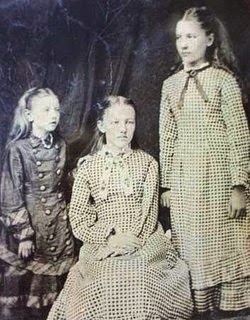
People. This is the REAL Ingalls family:


Ingalls Family L-R: Caroline, Carrie, Laura, Charles, Grace, Mary


This IS NOT the real Ingalls family:


When talking about the real Laura Ingalls Wilder, her friends and family, can we please use photos of the real Laura Ingalls Wilder, her friends, and family?

I realize there are people who are fond of the "Little House on the Prairie" television series and I don't begrudge them that. But if a writer is going to the trouble of writing an article about "the real" Laura Ingalls Wilder, or discussing "real" situations that happened to the Ingalls family, illustrating a piece with a photo of the fictional family is lazy writing and tells me the author can't be bothered to do his or her research.

To make it worse, when I geek out about LIW as I'm often known to do, there are people who didn't know Laura Ingalls Wilder was a real person. OR they know she was a real person but they think the events portrayed in the TV show are true to life.

There is very little about the Ingalls family in Little House on the Prairie TV show that even remotely resembles the family of the real Charles and Caroline Ingalls.

The Ingalls family had no adopted children
No, Virginia. The Ingalls never adopted a son named Albert.


Even today, there are people wondering why the real Laura Ingalls Wilder didn't write about her adopted brother Albert. Dude. There was no Albert. He was a figment of Michael Landon's imagination just like the rest of the "Little House on the Prairie" TV series. There was no Cassandra, no Albert doing drugs, no climbing to the top of the mountain (as if Walnut Grove actually had mountains), and no Nellie Olsen running a hotel.

The Ingalls family didn't live most of their life in Walnut Grove, MN

The town of DeSmet, SD and it's rich history would have made an awesome backdrop for a TV series.

Though the years the Ingalls family lived in Walnut Grove, MN were notable ones: Grasshoppers, floods, Laura braving a bridge as she sought help for her sick Mom. the truth is, the Ingalls family didn't spend many years there. Laura and Almanzo certainly didn't meet there, and the whole town didn't blow up once the entire Little House gang was done with it. 

The real Ingalls family were the first settlers in the town of De Smet, SD. They moved there when the real Laura Ingalls Wilder was 12 years old. They weren't"among" the first settlers, but the actual first people to say "hey, we're going to live here" thanks to the the kind surveyors who let the family winter in their home.

This is what makes me grumpiest. There is history here. The founding of a town and all the characters in the town? Man, that would have made an awesome series! The birth of a new town? Cap Garland? The comedy team of Almanzo and Royal Wilder? Laura watching the town drunks as she sewed her buttonholes? Lazy, Lousy Lisa Jane? I can tell you that the true life Ingalls family was more entertaining and interesting than the TV Little Housers.

Also? Why is no one in the Masters family featured in the television series at all? This is a family that played prominently in the Ingalls family's history - at least during the time the Little House books take place. Man, that kooky crew would have been better fodder than the Garveys.

There is so much that could have been used from Laura and her family's real life adventures which would have been way more interesting than the  Little House on the Prairie TV series we saw on NBC. And I'm not saying that to knock the series, (even though it became unwatchable for me after the first couple of seasons) I'm saying that because the series could have been so much better than it was if we had just stuck with the history of the Ingalls family. It had all the elements of an awesome TV series: excitement; intrigue, and romance, and no one would have had to compromise family values to get us there. Instead, Landon relied on the tugging of the heartstrings and many unlikely scenarios.

Mary Ingalls was never married

Mary Ingalls never married.


Sigh. No. Sorry Adam Kendall. Sorry blind school in Walnut Grove that never actually existed. Sorry all those extras who were on set to be used as blind kids. The real Mary Ingalls famously went to the Iowa School for the Blind in Vinton Iowa. She attended for several years  and then came home to live with her parents. After her parents passed away she lived first with Grace and then with Carrie. There was no man in her life and she didn't found a school for the blind. Yet, there are people today who think this really happened because a TV show took a few too many editorial liberties.

Yes, I know the "Little House" books were considered Historical Fiction


Now, it was pointed out to me one Sunday afternoon that the The Little House Books took a few editorial liberties of their own. I get that. Though letters between Laura Ingalls Wilder and her daughter and editor, Rose Wilder Lane show she argued to keep the books as truthful as possible, it's true that the Wilder women DID make the story into a work of fiction to sell as a series of juveniles. With that said, they still managed to capture the essence and pioneer spirit of the Ingalls family and stay true to much of their history and core values. The television series became so far removed from the real story of the Ingalls that one can't even argue that the two situations are similar.

Can we please stop using photos of the fake Ingalls family when talking about the real Ingalls family?

It was once suggested to me there might be copyright issues with many of the photos of the real Ingalls family and their friends, but there are still plenty of  photos of LIW and family available via the Creative Commons, Fair Use, or the Public Domain.

There are better options than Michael Landon and the Melissas. 


Once again. This is the real Ingalls family:


Now that you know, can we please stop trotting out photos of the fake TV series when discussing the real Laura Ingalls Wilder, her family, and her books?

Thank you, kindly.


Affiliate links were used in this post.

10 Things You May Not Have Known About Laura Ingalls Wilder

 Laura Ingalls Wilder Laura Ingalls Wilder super fans weren't surprised by many of the reveals in "Pioneer Girl: The Annotated Autobiography. "  Those of us who have read many of the biographies and other writings of Mrs. Wilder knew, for example, that the family spent a bit of time in Burr Oak, Iowa where they helped to run a hotel and that the Ingalls sister had a beloved little brother, Charles "Freddie"Frederick Ingalls who died in infancy.

There were other items I learned from "Pioneer Girl," and a few other books that were surprising, even to me. For discussion sake, that is, if anyone is reading at all, I thought I'd share some items I found surprising or that others told me surprised them.


Warning: Spoilers ensue:

1.  Jack didn't go on Plum Creek with the Ingalls family

Brindle Bulldog (Not Jack)

The story about Jack the faithful Brindle Bulldog following the Ingalls family all around the Midwest until he eventually "went to his reward" when Laura was a tween? That was a bit of an embellishment.

The real Jack didn't even make it out of Kansas, at least not with the Ingalls family. When Charles sold the family ponies to have money for their move back home, Jack was sold right along with them. Jack was fond of those ponies he walked all those miles behind, and would rather go with them then with the Ingalls family.

Some of the stories about Jack in the "Little House" books are fiction, as he wasn't with the Ingalls family after Laura was three or four. I often wonder if the Ingalls had another dog who was as loyal  and devoted as Jack because Laura looks back with such fondness in her books.

2. Laura may not have been old enough to really remember Jack, anyway

Laura Ingalls Wilder - Long after Jack was "sold with the ponies."


When you consider Laura was only about three or  four when the family was squatting on the Kansas Prairie, she probably wouldn't have been old enough to remember much about Jack. Indeed, Laura relied on family stories to fill in a lot of the details of the Kansas Prairie and the Big Woods of Wisconsin. I think it's wonderful that there are so many wonderful stories to pass down to the generations. While some families' history is lost forever, Laura ensured her family's legacy lives on forever.

3. Laura's rag doll wasn't named Charlotte

The original "Little House"


Remember Laura's beloved ragdoll, Charlotte? Her name wasn't Charlotte, it was "Roxy" or "Roxey" - both spellings were used in Pioneer Girl. Roxy was a gift for Laura's fifth birthday and it was the first time she had a doll of her own.

When Laura was living On the Banks of Plum Creek , a much younger neighbor girl, Anna Nelson, had a bit of a tantrum over Roxy. She borrowed the doll one day when she and her mother were visiting the Ingalls family and didn't want to return her. Caroline told Laura she was too old for dolls and Laura reluctantly gave the doll to Anna. (I felt so bad for Laura when I read that, didn't you?)

Roxy went home with Anna - and Laura found her in a puddle the next time she visited the Nelson's. As Laura wrote that she kept Roxy "so carefully that she still looked nice" you can imagine what it would have been like for her to find poor Roxy face down in a puddle, a victim of the elements and an ungrateful child.

4. Mr. Edwards (or whatever his name was) didn't hold off an angry mob so Charles Ingalls could claim his land.

The grave of Edmund Mason, the man rumored to be the real Mr. Edwards.


We'll probably never know who the real Mr. Edwards was or how many times the Ingalls family encountered him during their lives. However, one thing that was revealed in Pioneer Girl's annotations is that Mr. Edwards never held back an angry mob so Pa could stake his claim in DeSmet, SD. Laura said that was a made up element of her family's sago to illustrate that such things happened all the time in the untamed West. Pa was actually able to file his claim without incident.

5.  The Ingalls family had a house guest when they wintered at the Surveyor's House


Now, I knew the Ingalls family had house guests during the The Long Winter but one thing that surprised me was that they also had house guests while they stayed at the Surveyor's House. When Pa was offered the job of caretaker for the Surveyor's House, family was happy to oblige. It was a good call as their claim shanty wasn't equipped to handle the winter and they didn't want to move away like everyone else.  What I didn't know is that another man lived in the house with them, a Mr. Walter Ogden.

Mr. Ogden asked if the Ingalls wouldn't mind putting him up during the winter and allowing him to keep his oxen in their barn. Charles Ingalls felt it wouldn't be a bad idea to have another man around out there in the middle of nowhere, just in case.

There would be a third man around that winter as well. Mr. and Mrs. Robert Boast also had a claim just outside of DeSmet but had no where to winter. There was another one room structure included with the Surveyor's House and so the Boasts and all their possessions stayed there, and the families visited often throughout the winter. In fact "Pioneer Girl" tells a fun story about how the Boasts had everyone over for New Year's dinner and the dinner guests had to go out the front door and to the back door to get to their spots at the table, since room was so tight what with a bed and chairs and tables and all.

The Boasts' were Ingalls' friends for life. They seemed to be best friends not only for Charles and Caroline but the entire family.

6. Charles Ingalls skirted the law when it suited his purpose


I always hesitate when adding information that may be a little controversial. Even though I formed a few not so favorable opinions about Charles Ingalls and the choices he made, I am the first to admit he had a solid work ethic, and his choices were mostly made for what he felt was for the good of his family. He was a devoted father and husband, and did what was needed to survive.  With that said, it's equally important to note Pa did skirt the law from time to time, when it suited his purpose. That's not a judgement, but it is a fact. I will let you draw your own conclusion about Charles Ingalls' character.

Squatting on Native American land

It's no secret the Ingalls squatted on Native American land just outside of Independence, Kansas. It's speculation, of course, but Charles most likely wanted to get a head start on claiming a good piece of land before the rush was on. However, the fact remains the Native Americans weren't gone yet, and the Ingalls weren't supposed to be there - and so they were asked to leave.

Running out on the rent

There was the incident in Burr Oak, Iowa when Pa packed up the family in the middle of the night to flee the rent. The family had moved to Iowa where Pa was to be partner in running a hotel. However, he never received anything for his work there and when the family moved out of the hotel to rent a home, they just didn't have any money.

When the family moved back to Plum Creek after staying in Burr Oak, they did so without settling up the rent that was due. Mind you, Pa did ask his landord first if he could send him money after they moved and he found work, but the landlord was worried that would never happen and said no. Pa took issue - after all he always paid his debts -and he woke his family in the middle of the night, packed up the wagon, and made it to another county before daylight.

Pa said he'd "be darned if he'd ever pay that rich, old skinflint Bisbee a cent."


Pretending to be the law to collect a debt

There's another incident in which Charles Ingalls acted above the law, though I'm sure he felt it was for good reason. In essence, Charles was fighting crime with crime - and whether one was better than the other is up to the reader I guess.

Pa worked as Justice of Peace before moving to DeSmet (and later on after settling in DeSmet), and I guess he still had some of his official looking papers with him. When workers started clearing out of the area ( just before that first winter was spent in the Surveyor's House), Mr. Boast approached Charles because he had sold a team of horses to a man who left town without paying. (Hmm...that sounds kind of familiar.) So Charles Ingalls, resourceful man that he was, took out his old "Justice blanks," wrote up a summons (that he wasn't authorized to write), gave a fake Sherrif's star to a friend of Mr. Boast, and sent the man to find the horse thief.

Payment ensued soon after.

7. Reverend Alden might not have been so trustworthy

The Reverend Edwin Hyde Alden


I recently came across something interesting on Wikipedia about the Reverend Alden - and it was confirmed in Pioneer Girl. Did you know good reverend had a bit of a bad reputation among the Native Americans? You may recall Rev. Alden as being the Ingalls' beloved pastor on Plum Creek and giving the first church service in DeSmet, SD.  There were also some sketchy episodes in Reverend Alden's past.

According to an article in the New York Times from August 15, 1878,  the Native Americans didn't trust Reverend Alden. He was working as a Native American Agent and committed several acts of fraud. In fact, the Native Americans considered him a "prince of liars" and threatened to kill him if he didn't go away.

 Also according to the article Reverend Alden was a "pious fraud and cheat" who swindled. An annotation in Pioneer Girl goes on to explain he drew money for carpentry work and kept it. He also kept his wife on the payroll. Needless to say, that line of work didn't work out for him and went back to work as a missionary.

What I find interesting is the Ingalls family liked the Reverend Alden much better than the devout Reverend Brown who eventually led the Ingalls' congregation in DeSmet. However, it's not surprising. The Ingalls family was drawn to colorful characters and the Reverend Alden surely had some good stories to tell.

8. Laura and Mary didn't argue over stuffing

Mary Ingalls

I loved the story about Mary and Laura arguing about whether or not there should be sage in The Stuffing That Never Was, because it reminded me of arguments with my sisters that were just so silly and petty. According to "Pioneer Girl," the girls "almost" argued but never actually made it to the argument over stuffing stage.

 Laura created the fake argument to illustrate the stress Laura and Mary were feeling after caring for a house filled with boarders during the spring rush. The house was finally empty, Pa was going to find them a goose, and Laura and Mary were walking away their tension. I probably would have found something stupid to fight over too.

9. Ma wouldn't have let Laura visit the Silver Lake railroad camp with Pa


In "By the Shores of Silver Lake " Laura tells a wonderful story about how Pa took her for a walk to see the railroad camp and explain how it all worked. The reality is, this was something that Laura put in the book so that readers would understand how the railroad was built. In real life, Caroline Ingalls would never have let Laura, a young lady, go to a rough railroad camp, even with Pa to protect her.

10. Laura and Almanzo Wilder may or may not have spent some time living in a cave


I talked about this in my last post - but I still don't know what to make of it. In "I Remember Laura" author Stephen W. Hines mentions the mystery of a cave Laura and Almanzo may have spent part of a winter in. The story is heresay, passed along supposedly by a dying Laura, to a roommate in the hospital, who told a visiting nurse who mentioned it to someone else. Who knows if it's true? It seems to me Laura would have shared this at some point to illustrate her Pioneer spirit. I share it with you here and I will let you draw your own conclusions. I'm on the fence.


The above are some items that will surprise people about Laura Ingalls Wilder and her family. Indeed, many of them surprised me. This is only part one of the surprising Laura stories. I have so many notes from all the Laura books and biographies read over the years, I'll share them all here with you.

I'm really enjoying this exploration of Mrs. Wilder's life. I hope as time goes by, you will use the comments section to add to the discussion as there's nothing I enjoy more than "Geeking Out" about Laura and family with others.

All photos on this page are via Wikimedia Commons and fall under the Creative Commons or Public Domain.

Grace Ingalls Dow: What Happened to Baby Grace?

Grace Ingalls Dow


Grace Ingalls Dow is the youngest of Laura Ingalls Wilder's siblings. In fact, of the four Ingalls sisters, Grace is the one I hear or read the least about. I wonder if it's because she was so young when Laura was married and maybe they didn't spend as much time together growing up as she did with Mary and Carrie.

I was curious about Grace so I did a little research about her to find out about her life as a child and young lady in DeSmet and, also,  her married years.

Grace Ingalls Dow

Grace Pearl Ingalls was born May 23, 1877 in Burr Oak, IA.  Although there are books written about Laura Ingalls Wilder's Iowa years, none of them were written by Mrs. Wilder herself as she omitted this period of her life completely from the books. It was during this period of time the Ingalls family was managing a hotel and Mrs. Wilder didn't feel it an appropriate image to portray of her fictional family.

In any event, Grace was either not born or a baby/child during the period of time we remember from the "Little House" series (she was 8 when Laura married Almanzo) and so we didn't really gather much information about her personality or about Grace Ingalls as a child or woman. However, Grace did attend school in DeSmet, and, as expected, she aspired to become a school teacher as her older sisters did. Grace attended Redfield College and earned a "Normal Course," which is apparently the certification awarded to teachers at that time.

From what I could gather, Redfield College was a Christian-based institute of learning, and the church may have helped to defray any costs. As Grace was an active participant in Sunday School - attending and teaching - this may have been how she learned of and attended the college. It bears noting that Grace and Mary are the only Ingalls sisters to attend college.

Grace Ingalls: Teacher and Writer

After earning her teacher's certification, Grace taught at several area schools but she never strayed too far from DeSmet. In addition to teaching in DeSmet, Grace also taught at the Esmond Township School just outside of Mansfield, SD.

Grace also dabbled in writing, contributing to local newspapers on a freelance basis. She was a correspondent for The Huronite and The DeSmet News for many years. Both Grace and Carrie contributed to The News' 50th Anniversary edition.

Grace Ingalls: Wife

It was while she was teaching in the Mansfield, SD area that Grace Ingalls met Nathan Dow. They were married in the parlor of Charles and Caroline Ingalls' home in DeSmet on October 16, 1901.

 I want to pause here to say that it's probably safe to assume that if Grace was married in her family's living room, both Charles and Caroline were in attendance, making hers the only wedding of their children they attended. That must have been a very special occasion. Grace was 24 and Nate was 42.

The following is the marriage announcement of Grace Ingalls to Nathan Dow:

Grace Ingalls and Nate Dow Marriage Announcement Dow-Ingalls
At the home of the bride's parents, Mr. and The happy event was of a quiet nature, only the relatives of the contracting parties being present.
The bride is a young lady who has grown from childhood in this city and enjoys the respect and confidence of the entire community. She is possessed of all the womanly traits that enter into the general make up of a [illegible] and loving wife. For sometime she has been one of the leading lady teachers in this county and has met with splendid success wherever she has been employed. We are truly sorry to have her leave our social circles where she has always been an industrious and cheerful worker, but we are glad to know she will remain in vicinity, living at Manchester. 
The groom is one of the industrious and prosperous farmers south of Manchester where he has the friendship and confidence of his neighbors for his upright dealings and honest character in every day life. He is a young man who by careful and business like investments has secured for himself the comofrts of life and is enjoying prosperity. They will make their home on the farm for the present. 
The NEWS joins with the large circle of friends of thie esteemable couple in wishing them abundant joy and happiness in the future.
The Dows had no children. They moved briefly to the Oregon coast as they hoped the climate would help Nate's severe allergies and asthma. At one point in their marriage, they rented their farm to another family and lived with Caroline and Mary Ingalls. (Charles Ingalls passed away in 1902.)

Grace Ingalls: Later Years


When Laura Ingalls Wilder was writing the "Little House" series of books, Grace helped her to fill in some of her memory and described in vivid detail about the Dakota wildflowers, of which Mrs. Wilder had no recollection.

Grace Ingalls Dow was a social woman participating in many area clubs and activities including the local chapter of the Ladies' Aide.

In 1924, Caroline Quiner Ingalls passed away so Grace and Nate Dow moved into the Ingalls home to care for sister Mary. After Mary passed away in 1928, while visiting sister Carrie Ingalls Swanzey, Grace and Nate moved back to the Manchester area.

Grace Ingalls: Death

Like her siblings, Grace Ingalls Dow suffered from diabetes. In 1932, she was hospitalized for "severe diabetes." Her sister Carrie came to stay for a bit during this time, bringing a copy of "Little House in the Big Woods " for her sister to enjoy.

Grace Ingalls Dow passed away November 10, 1941 in Manchester, SD,  from complications of diabetes. She is buried in the DeSmet cemetery.

Grace Ingall's Dow's death notice:
Obituary for Grace Ingalls Dow 
Mrs. Nate Dow passed away at her home in Manchester at 11:00 Monday evening following a lingering illness. Funeral services were held Wednesday afternoon at the house and at the Manchester Presbyterian Church, the Rev. D. Van Houte officiating. Mrs. Dow had attended school in De Smet and Redfield College and had taught school in Manchester Township She was active in the Ladies Aid and club work and was a local writer. Pallbearers were Lucian Howard, Howard Rowen, J.L. Towberman, Harvey Marx, E.C. Brinkley, and Alfred Anderson. Left to mourn her passing are husband Nate Dow, two sisters, Mrs. Carrie Swanzey of Keystone and Mrs. Laura Wilder of Mansfield, Mo., and a niece, Rose Wilder Lane.
One thing I want to mention about the children of Charles and Caroline Ingalls is that they were all smart, accomplished women. They valued education and hard work and it shows. All of the Ingalls can be considered role models for young ladies of today.


Disclaimer: All links to books on this page are affiliate links.

Carrie Ingalls Swanzey: Accomplished Woman

L-R Carrie Ingalls Swanzey, Mary Ingalls, Laura Ingalls Wilder


Laura Ingalls Wilder was an accomplished woman. She rode across the West in a covered wagon, wrote for farm journals and newspapers, authored a series of books, and her family was integral in establishing a town in South Dakota. She was well-liked a pillar of her community in Mansfield, Missouri.

Do you know who else was an accomplished woman?

Mrs. Wilder's sister, Carrie Ingalls Swanzey.

Who was Carrie Ingalls Swanzey?


Born "Caroline Celestia Ingalls," just outside of Independence, Kansas on August 3, 1870, Mrs. Swanzey is remembered by Laura Ingalls Wilder fans first as "Baby Carrie," then as a sickly young lady who got in trouble for rocking her classroom bench in "Little Town on the Prairie ." We don't really hear much about Mrs. Swanzey after Mrs. Wilder married and moved on, however. And why would we? It was Mrs. Wilder everyone wanted to know about.

I'm fascinated by Carrie Ingalls, however. Well, maybe "fascination" isn't the right word. Maybe it's more that I'm interested in her.

As I was re-reading "Little House on the Prairie " I remembered that Baby Carrie was actually born during that time. I was thinking how it must have been for Caroline Ingalls, Sr., giving birth smack dab in the middle of Indian territory, with neighbors and a doctor she didn't know very well giving the assist.  But that's not why I'm interested in Carrie Ingalls Swanzey.

Downtown DeSmet in more modern times


Throughout most of "Little House" series, Mrs. Wilder portrayed her sister as meek or sickly. Carrie didn't really seem like someone who had a lot going for her. I'm not saying Laura didn't love and enjoy her sister, because it's obvious she did. However, she gave no indication of the woman Mrs. Swanzey turned out to be.

Carrie Ingalls Swanzey: An Independent Woman


I'm interested in Carrie Ingalls because she was an independent woman during a time when being an independent woman wasn't encouraged.  Even though she studied to become a teacher because she wanted to help support her sister Mary Ingalls in college, she didn't enjoy it and gave up after teaching only a short time. Thus, when Mrs. Swanzey was 19, she began her apprenticeship as a typesetter at DeSmet's newspaper, The Leader.

According to many articles and resources, Mrs. Swanzey held a variety of jobs while she was in her 20's including working at newspapers, teaching, working at the post office, and clerking at shops around town. Now, keep in mind this is during a time when most women her age were married and into their second or third child. While we may not know why Carrie married so late in life (we'll get to that in a bit), one can imagine people in town must have thought her of something of a spinster.

When Laura Ingalls Wilder discussed how "sickly" Carrie was, I wonder if it wasn't because of her issues with breathing. Mrs. Swanzey suffered from various issues with allergies, sinuses, and asthma. It was those health issues that drove her to seek out a more accommodating climate. At the age of 35 Mrs. Swanzey moved first to Boulder, Colorado, and then to Wyoming still as an unmarried woman--a bold step for a single gal. There's speculation she worked at a newspaper during this time, but nothing concrete.

Carrie Ingalls Swanzey: Homesteader and Newspaper Woman

Carrie Ingalls Swanzey


Her stay outside of South Dakota was short lived, however. Mrs. Swanzey moved back to South Dakota in 1908 or 1909. Like her father, Carrie was attracted by the promise of land - once Indian land - that was being offered to settlers. A lottery was held for "white" men and women and Mrs. Swanzey won the drawing and became a landowner, settling in the town of Topbar, South Dakota. (This photo found on Pinterest shows Carrie standing by her claim shanty. ) However, as winter into South Dakota isn't conducive to shanty life, Mrs. Swanzey only spent the warmer months on her own land, wintering in the town of DeSmet with her family.

While in South Dakota, Mrs. Swanzey began working at and eventually managing a newspaper, The Bugle, in the town of Pedro, Though it once had its own newspaper, Pedro is now abandoned as a ghost town.


In 1910, at the age of 40, Carrie Ingalls transferred to a different newspaper, The Roseland Review, in the town of Roseland, SD.  Mrs. Swanzey's employer, E.L. Senn, acquired several newspapers throughout South Dakota, and Mrs. Swanzey managed many of them. In 1911, she was managing a newspaper in the town of Keystone, SD when she met the man she would marry, David Swanzey.

Imagine traveling around the state as a single woman and managing newspapers instead of settling down and finding a husband. Again, we don't know if Mrs. Swanzey chose to be single during this time, or if there weren't suitors coming to call. In any event, she most likely a curiosity for those around her. Mrs. Swanzey enjoyed traveling and seeing new places,  and I like to imagine she enjoyed her independence. In fact, she was the only Ingalls sister to visit Laura and Almanzo Wilder at their home in Mansfield, Missouri.

Carrie Ingalls Swanzey: Wife and Step Mother


Mrs. Swanzey married her husband, a 50 year old widower and miner name David Swanzey on August 1, 1912. As he had two young children, she retired from the newspaper life to help raise them. Carre Ingalls and David Swanzey's Wedding Announcement: Carrie Ingalls and David Swanzey Marriage Announcement
In Rapid City, Thursday, August 1, 1912, David N. Swanzey, of Keystone, and Miss Carrie Ingalls of De Smet, Rev. W.H. Sparling officiating. There are many Rapid City people who will be much surprised to read that Dave Swanzey has taken unto himself a wife. 
Mr. Swanzey has lived a good many years in the Hills and is known to everybody around Keystone and Hill City, and to all the old timers in Rapid City. He is very much a gentleman and the lady is fortunate in being chosen as his bride. 
The bride is an accomplished young lady, being at one time the manager of the Keystone Recorder and later was in charge of the Hill City Star. She has been living with her mother at De Smet for a few months, and came from there here except that she stopped on her way at Philip, near which place she has a claim. Mr. Swanzey met her here and they went immediately to the Episcopal church and were married. They left last evening for Hot Springs, where they will spend a few days before going to Keystone to live. 
They will go immediately to housekeeping.
I want to say here that every account I read about the Charles Ingalls family is that there were no grandchildren who survived besides Rose Wilder Lane. However, as Carrie Ingalls Swanzey took over a mother's role and raised two children, I would like to think her step children are part of the Ingalls legacy. (I'm going to be learning more about them in the weeks and months ahead and sharing what I learn here.)

Incidentally, Mr. Swanzey was the man who named Mt. Rushmore.

In 1924, Caroline Quiner Ingalls passed away leaving Mrs. Swanzey's sister, Grace Ingalls Dow, to care for eldest sister Mary Ingalls who was blind. In 1926, Ms. Ingalls came to stay with the Swanzey family in Keystone. While visiting, she has a serious of strokes, one that was quite debilitating. After time spent in a hospital to recover, Ms. Ingalls returned to the Swanzey's Keystone home where she passed away on October 20, 1928 at the age of 63 after succumbing to pneumonia and the symptoms of her various strokes.

Carrie was very supportive of Laura Ingalls Wilder and her stories, sharing her own stories and memories with Mrs. Wilder for her books and articles. On June 2, 1946, at the age of 75, Carrie Ingalls Swanzey passed away due to complications of diabetes. She was only outlived by her sister Laura and step-daughter, Mary.

Carrie Ingalls Swanzey: Accomplished Woman


Now, I ask you...wasn't Carrie Ingalls Swanzey an accomplished woman? During a time when women married young and spent their lives taking care of their husbands and families, Mrs. Swanzey traveled and enjoyed a career as a newspaperwoman. She owned her own land, and made her own way and for that she has my admiration and respect.


Disclaimer: All links to books on this page are affiliate links. All images in this blog post are via Wikimedia Commons and part of the public domain.

Who Was Mr. Edwards?


The Ingalls Family

One big question fans of Laura Ingalls Wilder have asked over the years is "Who was Mr. Edwards?" There's been much speculation but what most agree is that there is no one "Mr. Edwards." Like the character of Nellie Olsen, Mrs. Wilder possibly borrowed experiences from different people she met along her journeys to create the "Mr. Edwards" character for her book.

So who might Mr. Edwards have been?


The Fictional Mr. Edwards


Mr. Edwards first appeared in Laura Ingalls Wilder's 3rd children's novel "Little House on the Prairie" as a neighbor of the Ingalls family when they briefly lived just outside of Independence Kansas. Laura was two during this time.  You may recall, Mr. Edwards was the neighbor who saved Christmas for the Ingalls Family by swimming across the swollen creek to bring food and presents. He and "Pa" helped each other as neighbors, and if he was a real person, he no doubt left a lasting impression on the Ingalls family.

Mr. Edwards also made an appearance in "By the Shores of Silver Lake " when he held back an angry mob so Pa Ingalls could file his land claim, and again during "The Long Winter" after visiting briefly with the family in their home, where he left $20 to help Mary get to college.

(We won't even talk about the Mr. Edwards of the television show who is so far removed from even the characters of the book that it doesn't even have a place in this discussion.)

Was "Mr. Edwards" Really Mr. Mason?


In Pioneer Girl: The Annotated Autobiography, Mrs. Wilder remembers a "Mr. Brown" as the neighbor who brought Christmas to the Ingalls family after running into Santa and doing him the favor of delivering presents. However, researchers couldn't find any evidence of any Mr. Edward or Mr. Brown living in the Independence, Kansas area during this time. They did, however, find evidence of an "Edmund Mason," a 25 year old bachelor living near the Ingalls family at that time.

Note: In "Pioneer Girl," the editor lists his name as "Edward Mason" (P.16n36).

The image to the right, from "Find A Grave" is to a grave stone of Edmund Mason in Independence, Kansas, and believed this to be that of the man who was a good neighbor and friend to the Ingalls Famly.

What is interesting to note, however, is that this "Mr. Edwards" is not a "Wildcast from Tennessee" as indicated in both Little House on the Prairie and By the Shores of Silver Lake . Edmund Mason was born in England.


Did Hiram Forbes Add to the Mr. Edwards Story?


You may recall the story of Mr. Edwards slipping Mary a $20 bill after he briefly visited with the Ingalls Family in "The Long Winter ." However, In "Pioneer Girl" Laura recalls her Uncle High, Hiram Forbes, who was married to her Aunt Docia as handing Mary a fistful of dollar bills as he and Docia left the Ingalls to settle in the Dakota Territory before moving on. This time period would have been about the age Laura was during "By the Shores of Silver Lake ."

Mr. Edwards DID NOT Hold Back An Angry Mob


In "By the Shores of Silver Lake ," Laura Ingalls Wilder tells of how Pa overheard someone who was planning on filing for the same claim he, himself, had been planning on filing. So he slept on the doorstep of the claim office to ensure a place in the front of the line. However, the men who were planning on filing the same claim weren't happy about it and a fight broke out. The Ingalls' friend "Mr. Edwards" appeared just in the nick of time and held off the angry mob saving the day once again. Pa filed his claim and the Ingalls family became pillars of the DeSmet, SD community.

Except that wasn't true, at least not the part about Mr. Edwards.

In "Pioneer Girl: The Annotated Autobiography," the editor, Pamela Smith Hill, notes this story wasn't true at all. When asked about this specific story by a reporter from DeSmet, Mrs. Wilder admitted this part of the story wasn't true. She put the item in the book to illustrate the rush for land. Apparently this sort of thing happened all the time,.. (p.178n67)

Who Was Mr. Edwards?


There are still people who are surprised the "Little House" series was fiction based on incidents in Laura Ingalls Wilder's childhood. So no one should be too surprised or let down by Mr. Edwards being a fictional character based on one or more of the people the Ingalls family met in the different towns they lived in. We will probably never know who the real Mr. Edwards was, but I think we can all agree he is an important part of the the fictional "Little House" story and a beloved character in American Fiction. Did he teach Laura how to spit? Somehow, I can't see Ma allowing that at all!


Disclainer: All links to books on this page are affiliate links.

True Facts About the Real Little House on the Prairie

If you belong to any online groups having to do with the real or TV Ingalls families , you might have noticed questions arising after Netfl...